



At FAB26, K-12 Maker Lab makes the case for hands-on learning in the age of AI
An international working group
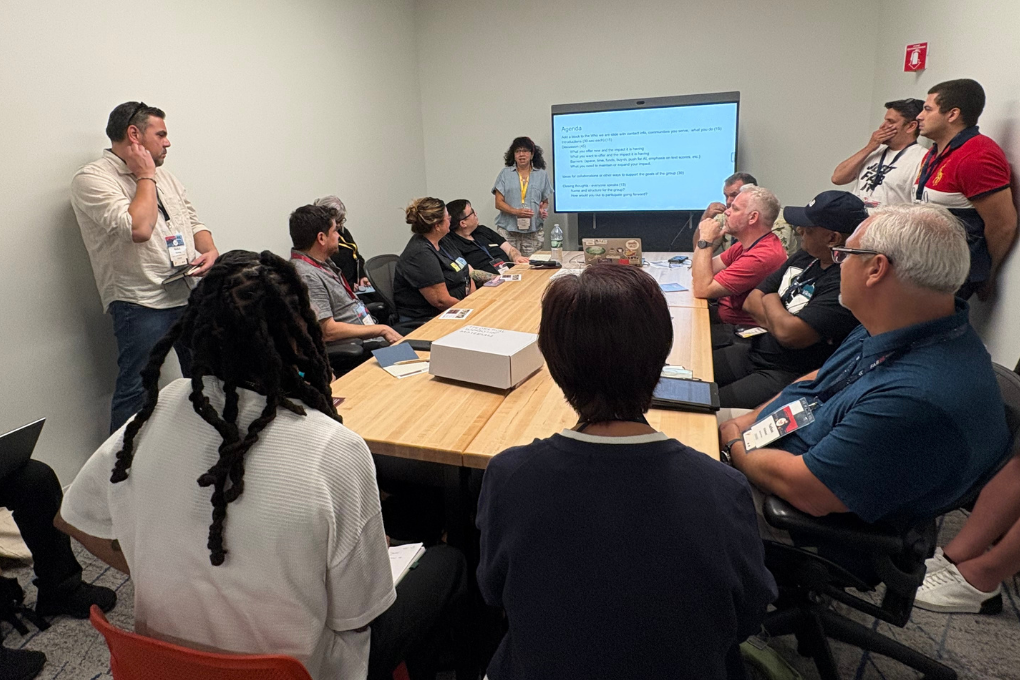
The working group for educators, entitled “STEAM/Maker educators inspiring kids, enriching K-12 academics & creating experiences that AI cannot” was, for many, a highlight of the week. The roughly two-hour discussion brought together an international group of Maker educators, Fab Lab directors, librarians, teachers, and administrators to discuss the role of experiential learning in a world increasingly abuzz about artificial intelligence.
Diane Brancazio, founder of the K-12 Maker Lab at the MIT Edgerton Center, opened the conversation with the K-12 Maker Lab’s philosophy that Maker and STEAM projects in K-12 are hands-on, meaningful, creative ways to teach. They help students connect with academic content, provide experience with professional technologies, and promote critical skills. “AI cannot give our kids these experiences,” Brancazio underscored. She also suggested that earlier and more equitable exposure to Maker experiences encourage young people to choose STEM classes in high school.
What hands-on learning actually builds
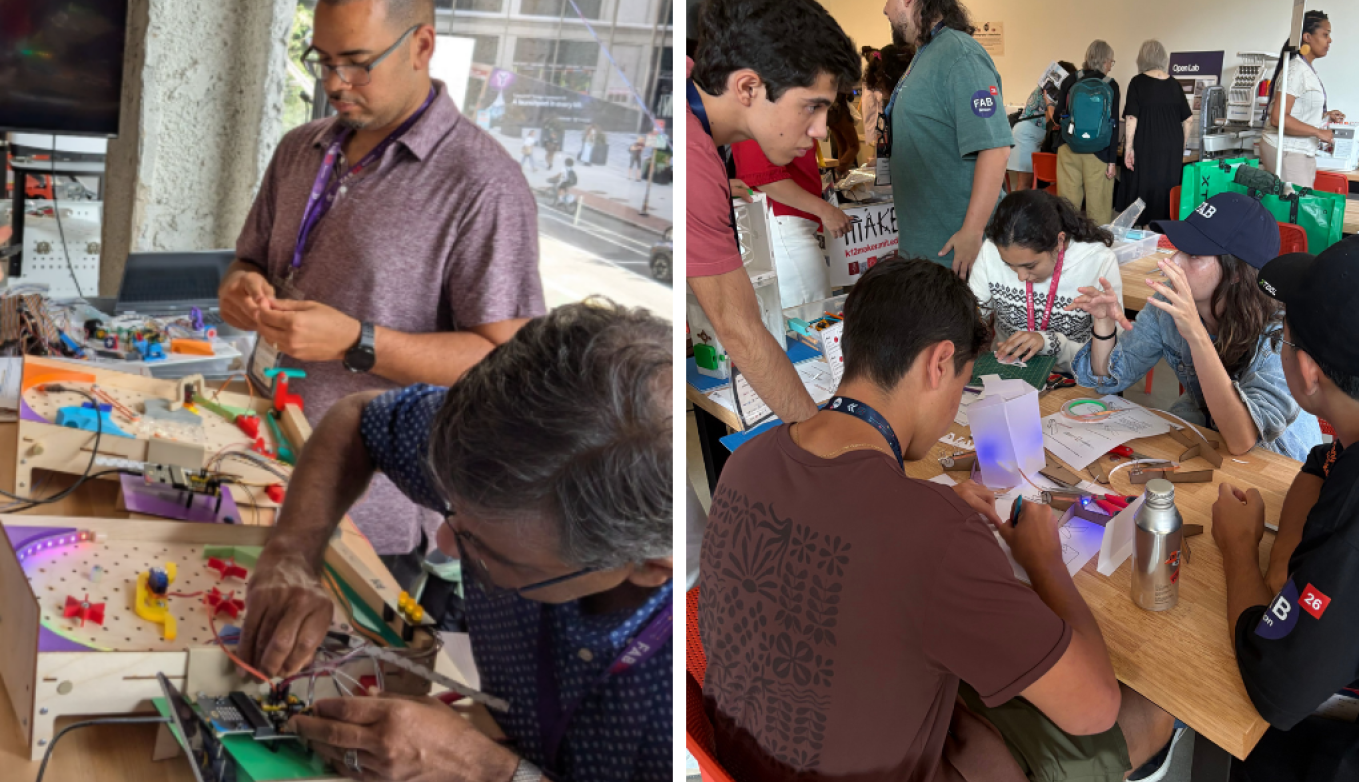
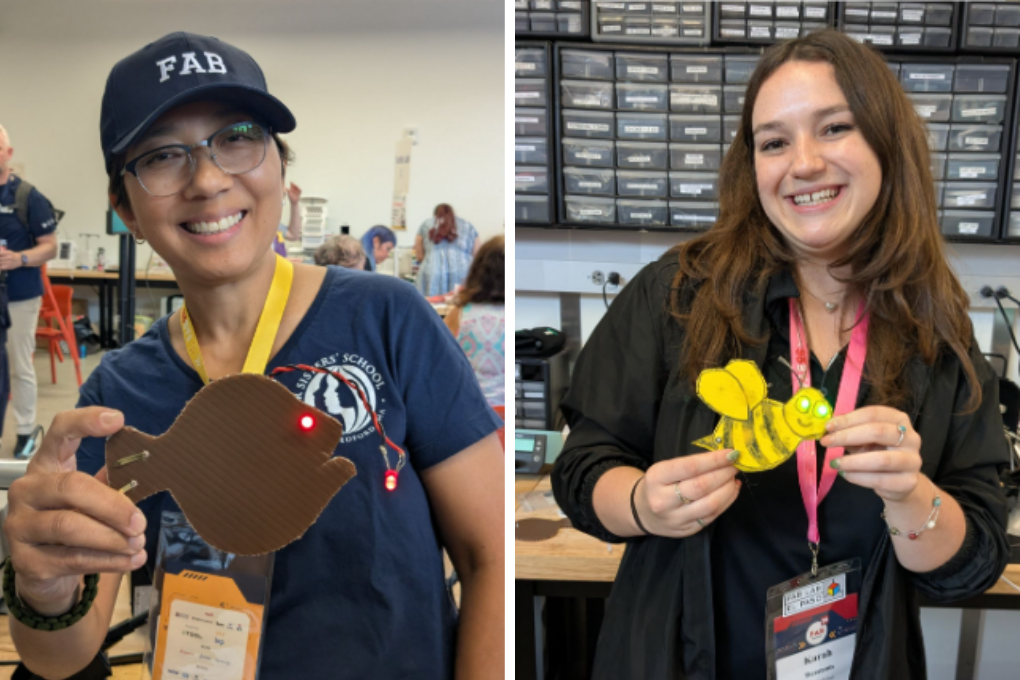
Maker educators from across the globe echoed the same sentiment: the process of making is the product. “We don’t make things, we make Makers,” one Makerspace leader remarked, to murmurs of assent. The thing that’s being made - whether on a 3D printer, laser cutter, or by hand - is simply a vehicle for learning.
And what is it that students learn from Maker projects? More than meets the eye.
Maker projects not only teach students to use tools, but help them learn a design process: defining problems, generating multiple ideas, researching existing solutions, prototyping intentionally and reflecting on results.
Through the process of making, students also learn the skills that make resilient, productive people: confidence, collaboration, creativity, judgment, persistence, ethical decision-making and more. Sometimes referred to as 21st-century or durable skills, these qualities not only contribute to a meaningful educational experience, they are also what universities and employers are looking for in their admissions and new hires.
Benita Tompkins, founder of the Center for Entrepreneurial Studies in rural Maine, spoke about the entrepreneurial opportunity available to students who visit her makerspace, which is in the back of a retail store. “We have kids that are creating and making and then selling, so they're learning the business aspect as well as the creating.” She also observes students taking initiative to care for the space and one another, and demonstrating empathy to their peers.
MIT professor Harold “Doc” Edgerton, whose legacy the Edgerton Center honors, once remarked “I believe in personal contact with the real world by experimentation.” Brancazio adds, “For humans, creation is a joyful act, triggering dopamine circuits in the brain and giving us a sense of satisfaction.” One word that never came up in the part of the discussion about using AI: joyful.
AI in the Maker Education toolbox
Within the working group, the range of opinions about AI use in education were full-spectrum. Some ardently oppose, while others are fully embracing it. Some are excited by its potential abilities to scaffold learning, while others question downstream consequences of bringing AI into creative work. “Was I telling them their drawing wasn’t good enough?” one primary school teacher wondered, reflecting on having used an AI platform to turn student artwork into “professional-looking trading cards.”
Some drew distinctions between collaboration with and delegation to AI agents. Are students outsourcing their thinking, or sharpening ideas against a tireless sparring partner? Still others raised concerns about motor development, life skills, and interpersonal dynamics as AI threatens to replace hands-on experiences.
Regardless of where they fell along that spectrum, all agreed that questions around the age of AI - and experiential learning within that context - cannot be ignored.
The future of AI and Maker
One ongoing goal of this working group is to establish best practices around AI in Maker projects. The K-12 Maker Lab will continue to collect observations, experiences and information about the ways in which artificial intelligence might be meaningfully integrated into hands-on learning experiences. Underlying this effort is the belief that students still need hands-on experience, foundational knowledge, and human collaboration to use AI well, including knowing when it's wrong.
Another primary goal of the group is to develop unified messaging around the value of Maker education in the age of AI. In this area, several promising threads emerged:
- Maker projects can align with the science and engineering practices of Next Generation Science Standards, which have been adopted in 20 states and the District of Columbia. Through this framing, Maker education is a core subject, not a special class.
- Makerspaces and hands-on projects provide students with experience using tools and technologies from various professional fields, broadening their own imaginations about what is possible for their careers and increasing workforce readiness.
- Learning is a tactile, emotional, interpersonal experience that develops more than content knowledge. Brancazio noted that “adding a community component to [Maker projects] boosts our skills in problem-solving and amplifies the rewards from the accomplishment.” These processes cannot be replicated by AI.
As the FAB26 working group session concluded, this diverse group of Makerspace educators lingered in the halls for a long while continuing to share ideas, recount stories of AI use gone right or wrong in their spaces, and form human relationships. That was the third mission of this working group: to connect the often-siloed, lone Makerspace teachers from disparate districts, museums, and libraries, and grow the K-12 Maker Lab community of practice.
A new home for Maker resources
For the K-12 Maker Lab, FAB26 event also marked the soft launch of the group’s highly anticipated new website. Drawing on feedback from educators, Makers, and designers, the updated site features improved navigation, enhanced features and a sleek new look. Following its official launch, the site will include regular blog posts from MIT Makers and on-the-ground practitioners delivering Maker projects in their own communities. Educators from the K-12 Maker Lab community of practice will also be able to share project inspiration and documentation for others to adapt.
Learn more about the K-12 Maker Lab at k12maker.mit.edu. Follow their blog for more on Maker, AI in education, and topics in experiential learning.