



Flipping the script and scaling it up: How the MIT Edgerton Center is bringing hands-on biology to MA’s second-largest school district
The big idea: Teach proteins first
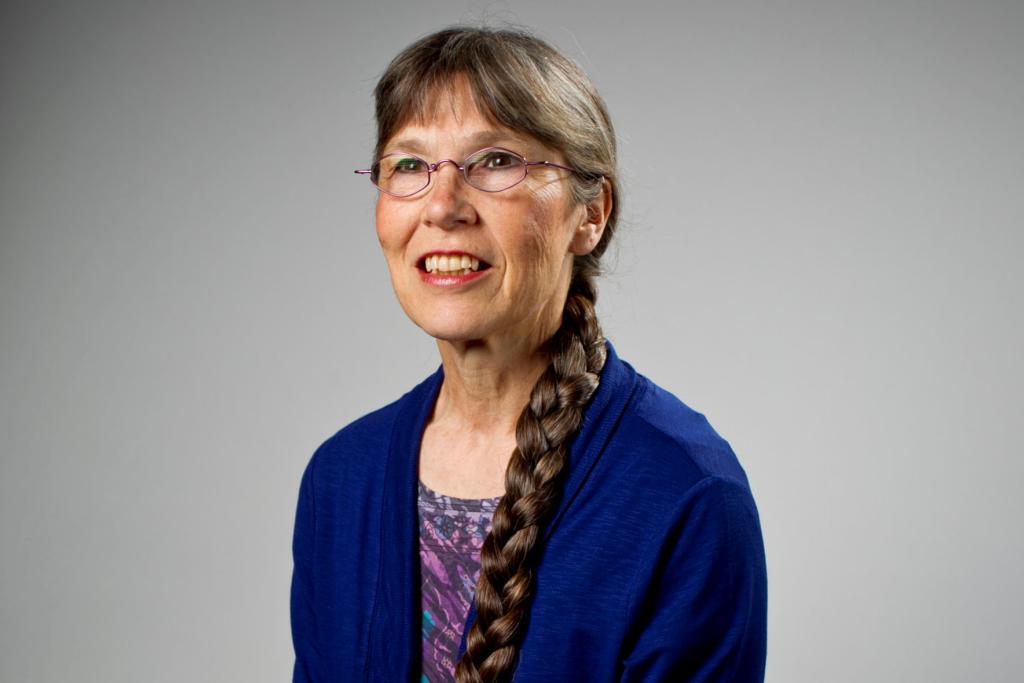
Vandiver is determined to reach more classrooms with her hard-earned insight: flip the script, and teach proteins before DNA.
Every biology student learns the central dogma of biology: DNA makes RNA, RNA makes proteins. It’s a building block of modern science. According to Vandiver, who holds a PhD in cellular biology, it’s also one of the most consistently misunderstood sequences in secondary education. It’s not a problem of students’ aptitude, but rather the order in which concepts are introduced. Vandiver likens walking a class through molecular biology without first explaining what a protein is to handing them blueprints for a building they’ve never seen. Most students memorize the steps without ever grasping what proteins are, or why they’re important.
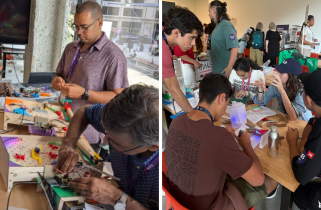
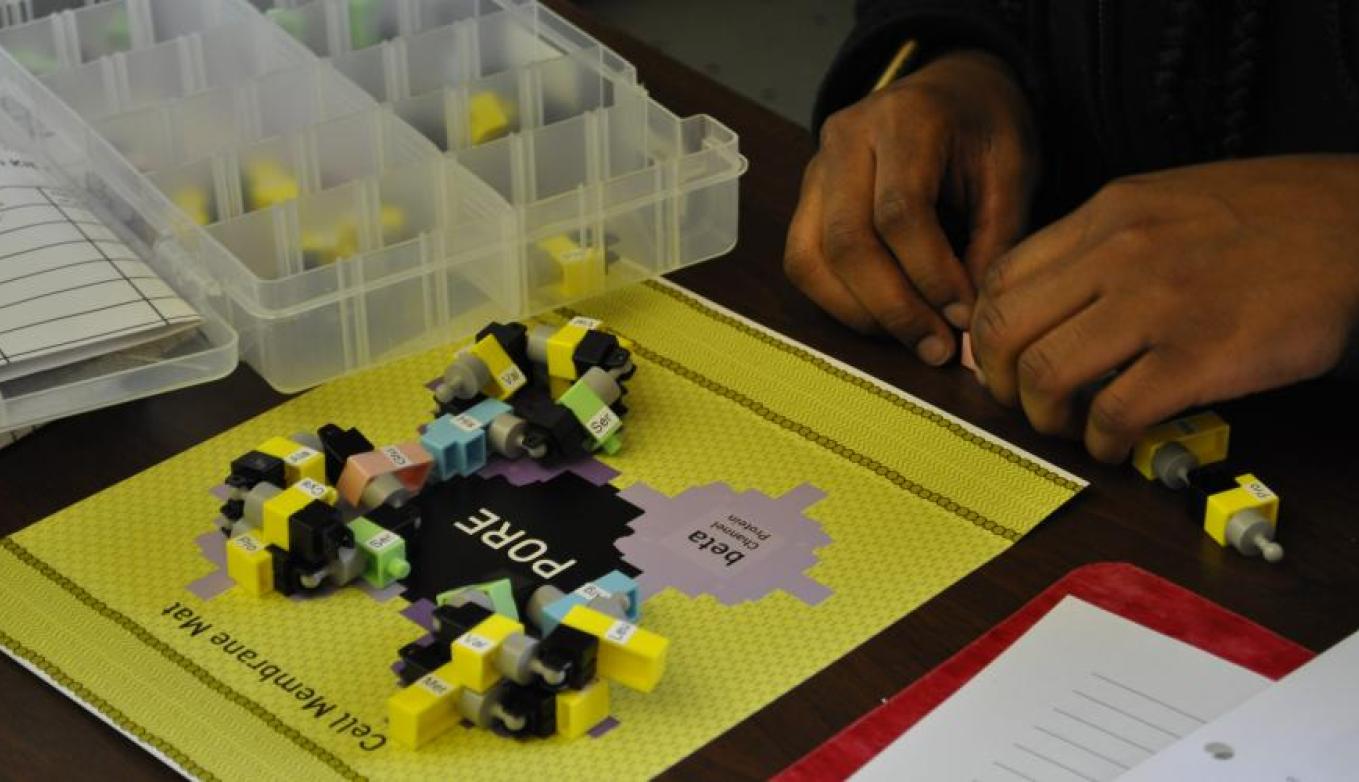
Vandiver's approach reverses the sequence. Working in pairs, students begin by building and understanding protein structure. They snap together what proteins are made of, learning what they look like and how they function. Only after creating proteins do they revisit the DNA-to-RNA-to-protein pathway, using genes that code for the very protein structures they built earlier. Then, concepts like amino acid order and protein function click into place. Students recognize the endpoint and experience a real "aha" moment, realizing "here's our old friend, the channel protein!"
A growing body of research indicates that active learning experiences are more memorable to students. What the hands build, the mind retains. This curriculum represents a pivot from memorization toward constructing understanding, and toward learning experiences that are more memorable and enjoyable. In other words, these sets create learning that sticks.
Proteins' Cinderella story
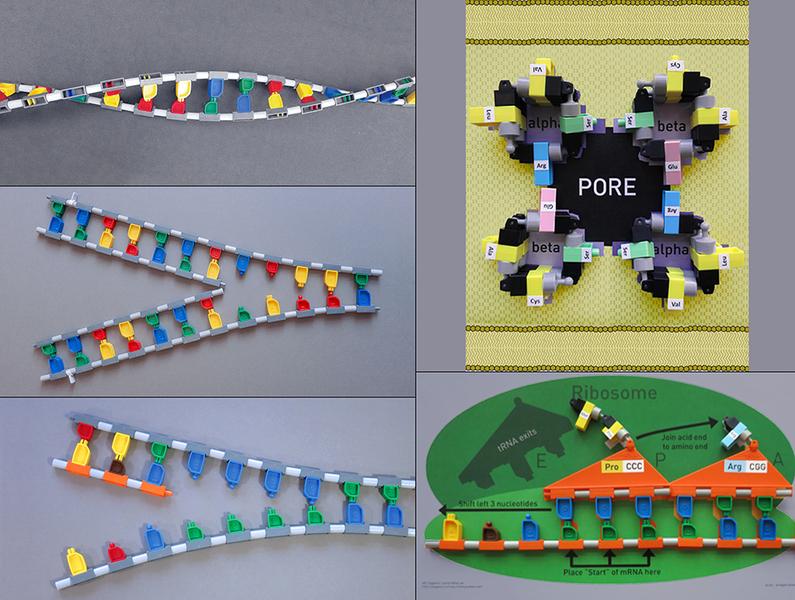
If DNA and its instantly recognizable double helix is a cultural icon, proteins are the stagehands behind the scenes. They build tissue, transport oxygen, fight infection and carry out nearly everything the body does. Still, in most classrooms, proteins are only introduced after students memorize information about DNA and RNA. Vandiver’s curriculum is a Cinderella story for proteins. It takes the molecule that does all the work but rarely gets the spotlight, and finally makes it the star.
Beyond the fact that proteins come third chronologically in the DNA-to-RNA-to-protein sequence, there was also a practical reason they had been left in the shadows. Walk into any biology classroom, and you’ll find a model of DNA. What you won’t find is a good model of proteins. If there is a good protein model, it’s almost certainly not one that students can manipulate, take apart and rebuild. That gap is exactly what Vandiver set out to fix.
Over roughly 25 years, beginning when she was still a middle school biology teacher, she prototyped, tested and ultimately redesigned DNA models from scratch. To create the novel protein models, the pieces that until then simply did not exist, Vandiver collaborated with Professor J. Kim Vandiver, Forbes Director of the MIT Edgerton Center.
The design of the pieces themselves is part of the learning. Color coding activates schemas of understanding that students already carry. For instance, yellow subunits are hydrophobic, evoking substances like oil or salad dressing. The pieces are tactile and modular, snapping together with a satisfying “click” that reinforces the logic that students will remember.
Roots at the MIT Museum, branches across America
This approach to biology was refined over years at the MIT Museum. In 2005, Vandiver worked alongside museum staff to create a public space where visitors could learn how cells work, and which could double as a classroom for teaching those same ideas. The result was a gallery, “Learning Lab: The Cell,” funded by the Arthur Vining Davis Foundation, which supported both the space and the workshops held there.
It was around this time that Amanda Gruhl Mayer 99' PhD '08 in genetic toxicology, joined the effort, collaborating on the workshops, and leading the graphic design of supplemental learning materials. Now, she contributes to the research behind the curriculum's newer, more advanced lesson plans.
The space was a hit. Together, Vandiver and Gruhl Mayer taught more than 1,000 students over several years, welcoming them by the busload from across Massachusetts and beyond. The audience spanned middle and high school and included AP biology classes. But it didn’t stop there. Teams of nurses, biotechnology company executives and even a class of federal judges came through as well. Judges, as it happens, need to understand DNA for forensic reasons.
That wide range of learners taught the team all about how to best convey this information to broad audiences. They discovered that the curriculum works best when students work in pairs with a molecular build set. Vandiver also created a participatory demonstration in which students take on roles and act out some of the more complex cellular processes with their own hands. They animate what the models are doing while the teacher acts as coach and explainer. Afterward, the group discusses the process together, layering in scientific language. Vandiver emphasizes how these resources free the teacher “to uncouple the overwhelming biology vocabulary from the conceptual story and provide an overview of the process.”
More than 1,000 students, one busload at a time, is a success story, but also hints at the constraint. The learning was impactful and memorable, but the outreach couldn't grow fast enough. That's what makes Worcester, and its entire district of teachers trained at once, such a significant step.
A Teacher of the Year reacts
The MIT team has traveled across the country delivering training on these materials, including a recent trip to Rapid City, South Dakota. In attendance was the district’s Teacher of the Year for 2025, Ross Hunter. He was the kind of participant whose enthusiasm drew in those around him, and his reflection captured a larger trend across education:
“This MIT hands-on solution does an amazing job of providing an understanding of protein synthesis. … An additional value of these models is that they are not technology-based. In the next several years in education, we are certainly going to see the pendulum swing back toward a classroom with less technology. … The tide is certainly turning, and MIT’s DNA and Protein modeling kits can help.”
It’s a philosophy of learning older than any screen, and one Vandiver likes to express with the words of Confucius: “I hear and I forget. I see and I remember. I do and I understand.”
What’s next: Going national
This philosophy, as applied to molecular biology, is about to reach its widest audience yet. This October, the Edgerton Center will feature its molecular biology sets at the National Association of Biology Teachers conference in Dallas. One of the premier gatherings for biology educators in the country, it’s a chance to put the proteins-first approach directly into the hands of teachers who could use it most.
In the end, the curriculum’s strength comes down to three key reversals. It makes proteins, not DNA, the star of the story: a Cinderella molecule finally stepping into the light. It trades screens and memorization for models students can hold, because hands-on learning sticks. And it flips the sequence of teaching itself, starting at the finish line so that the journey there makes sense. Teach it in that order, put it in their hands, and molecular biology transforms from something that students memorize into something that they understand.
For more information about the Edgerton Center’s biology curriculum sets, visit this page. Find more information about NABT conference events here.
Photos by Amanda Gruhl Mayer and Kathy Vandiver