



Graduating senior leads grassroots hackathon in 4-409
The build
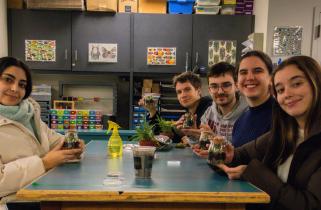
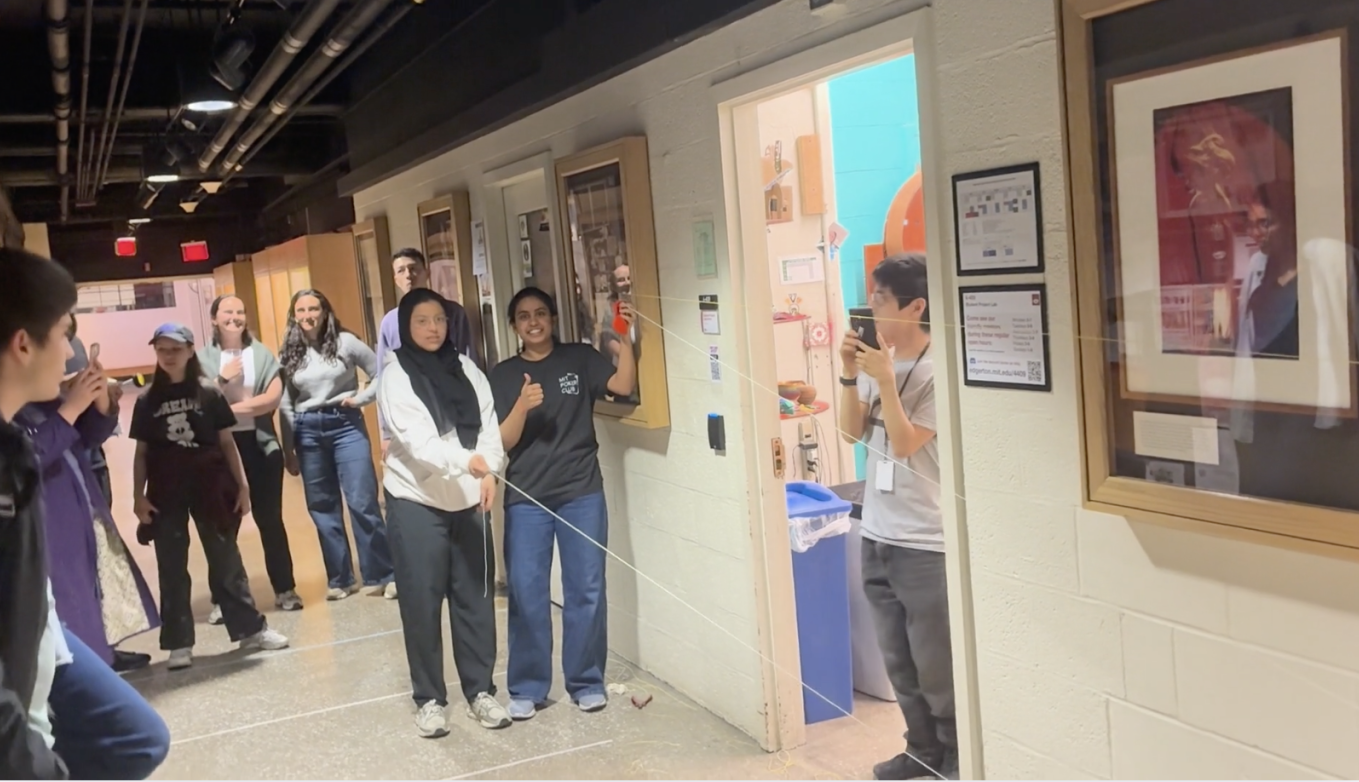
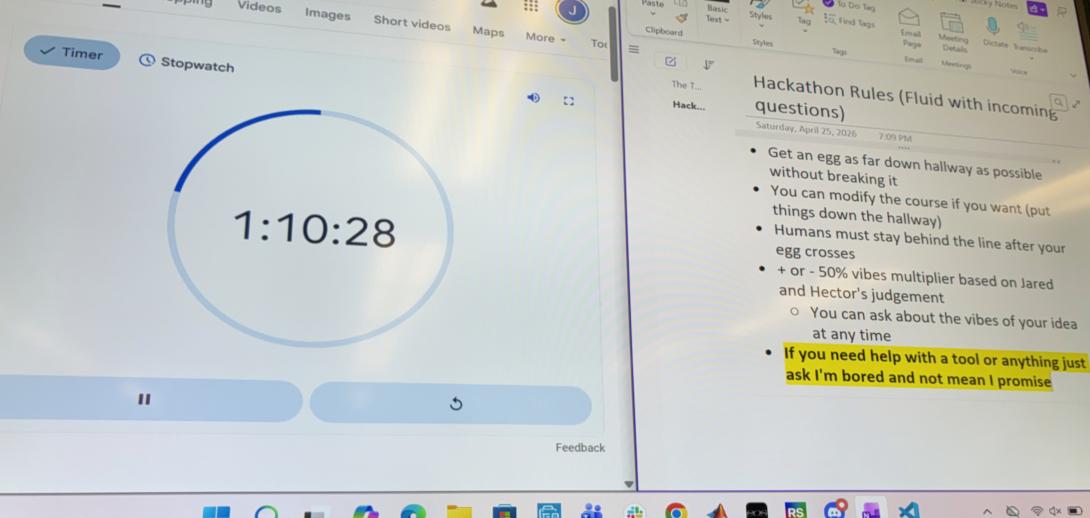
The setup was deliberately minimal. Teams of two to four students had two hours (Byars, by his own admission a "benevolent ruler," tacked on an extra half hour to the planned 90-minute build) and one rule: get the egg as far down the hallway as possible. Everything else was up for interpretation, and for negotiation.
"I wrote the rules on the board and kept changing them as they were building," Byars said. When one team asked if they could anchor the far end of a zip line at the other end of the course, Byars liked the idea so much that he amended the "no modifications to the course" rule on the spot.
He also introduced a "vibes multiplier," a mechanism by which judges could reward especially creative designs, or penalize mundane ones. The goal was to encourage students to take risks and lean into unconventional ideas.
Every team's design delivered: some meeting the challenge, and some bringing the laughs. A ski lift style rig (Byars' personal favorite design) set an egg gliding smoothly down Strobe Alley. One optimistic team simply wrapped their egg in colored paper and paper towels before underhand pitching it down the course. Another team encased their egg in a tennis ball for a long, dramatic roll. Their final turn left, as Byars put it, "a trail of egg along the hallway." (It was, he confirmed, very funny.)
Turning a classic prompt sideways
As Byars mulled over ideas for challenge prompts, eggs were appealing as a jumping-off point, but egg drops felt overdone. "So I was like, what if you just do it horizontally?"
The horizontal twist turned out to be deceptively tricky. "It's a hard challenge," Byars explained. "You're trying to get a thing as far as possible, which requires a lot of energy, but you can't give that energy to the egg. So you have to decelerate it in a controlled way." The zip line, he remarked, nailed it with constant speed and a gentle landing.
Better together
If the Trashathon had a mission statement, it was the 4-409 ethos itself: show up, build something, have fun, ask for help if you need it. (Indeed, asking questions was explicitly encouraged three separate times in the written rules.)
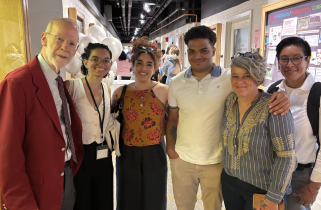
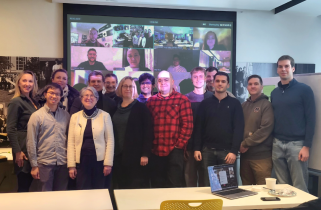
In addition to welcoming in members of the larger MIT community, Byars also turned to his friends for help. He got the word out through student shop manager Paola Romero '27, who is well-practiced at leading community events in the makerspace. Student-led events like the Trashathon are part of the fabric of 4-409, where mentors and shop users are welcome to turn their own ideas into open invitations. Sarah Habona '26 helped students get oriented to the space and tools, while Hector Lugaro '26 co-judged, weighing in especially on the vibes multiplier.
"Everyone just came trying to have fun. No one really cared about who won," Byars said. "I'm very grateful to my friends, and to everybody else for just showing up."
"I could do this, and so I did"
Byars has been a mentor in 4-409 since his sophomore spring, and is a veteran of two Edgerton Center build teams: Arcturus and Combat Robotics Club. But the Trashathon wasn't a team build, a class assignment, or a sponsored event. It was just an idea he floated at a mentor meeting, then carried out - eggs and all.
"I was like: I could do this, and so I did. And it worked."
That, in a sentence, is 4-409.