

MIT Edgerton Center biology models hit the national stage at NABT 2026
The model difference
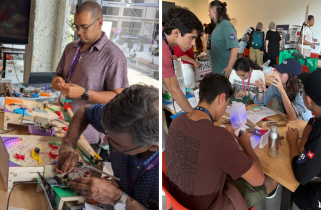
One of the challenges of teaching biology is making the tiny mechanisms of life visible and accessible to learners. “When you see concepts on a PowerPoint, they just wash away,” Volk says. Physical models help learners connect the dots between structure, function, and process as they fold, connect, and manipulate the models with their hands. “It just sticks,” Singh adds. “It sticks a lot better in the brain.”
To complete these hands-on lessons, students often work in pairs or groups of three, so they learn from each other as well as from handling the models. “Somebody can ask you a question that you yourself don’t know, and then you start to think about it,” Singh says.
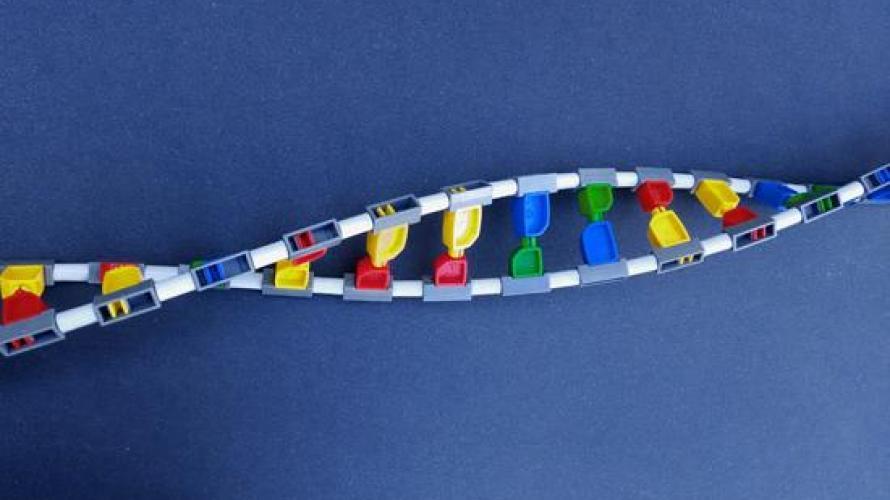
The curriculum also flips the script on the classic order in which biology is taught. In this curriculum, students build a protein first to understand how it works, then move to the DNA that codes for it, and see how a mutation can change the protein’s function. “Why does a mutation matter?” Volk says. “Students don’t understand that if they don’t understand how a protein works.”
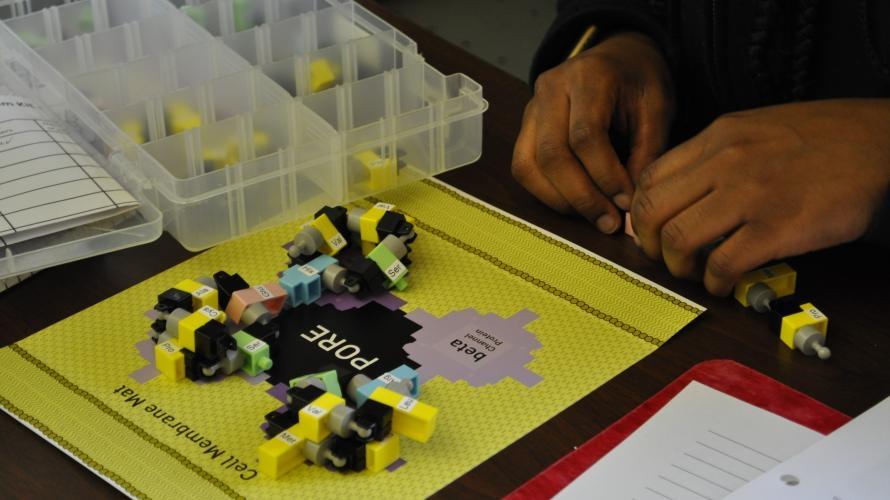
The lessons assume no prior knowledge, so every student starts at the same level and works up to more complex ideas together. These carefully crafted elements of the curriculum are why it works across grade levels and settings.
Vandiver, the Edgerton Center’s life science consultant, as well as director of community engagement and education for the MIT Superfund Research Program, has been refining these materials and her approach to teaching them for more than 20 years. Gruhl Mayer joined the project in 2008, bringing her own background in molecular biology and graphic design to the kits. The duo has trained about 1,000 teachers to use these novel teaching tools. The most common feedback following their workshops is “I wish I had learned it this way.” The second-most common: “How do I get this for my classroom?”
Earlier this year, educators in Worcester, Massachusetts got an answer to the classroom question. After the district’s science curriculum specialist attended an MIT workshop, Worcester Public Schools — the second-largest school district in the state — received a grant from the Massachusetts Life Science Center to invest in 55 classroom kits, along with instructional booklets and a districtwide professional development program.
From MIT to the national stage
With this proof of concept operating on the local level, the team’s next step was to bring the materials into the national spotlight. NABT, which Vandiver calls “the gold standard” in professional science teaching organizations, was the best place to do that. Attendees are typically specialists who care about teaching biology well, including AP Biology teachers and college instructors. If these teachers embrace a tool, that’s a meaningful endorsement, and the Edgerton team earned plenty of endorsements.
In addition to hosting its booth in the exhibition hall, the team presented five unique professional development workshops over seven sessions. Workshop topics ranged from a basic introduction to DNA and proteins, to more specialized sessions covering hemoglobin and sickle cell disease; biotechnology and lab techniques; and cytochrome P450 proteins, vaping, and cancer.
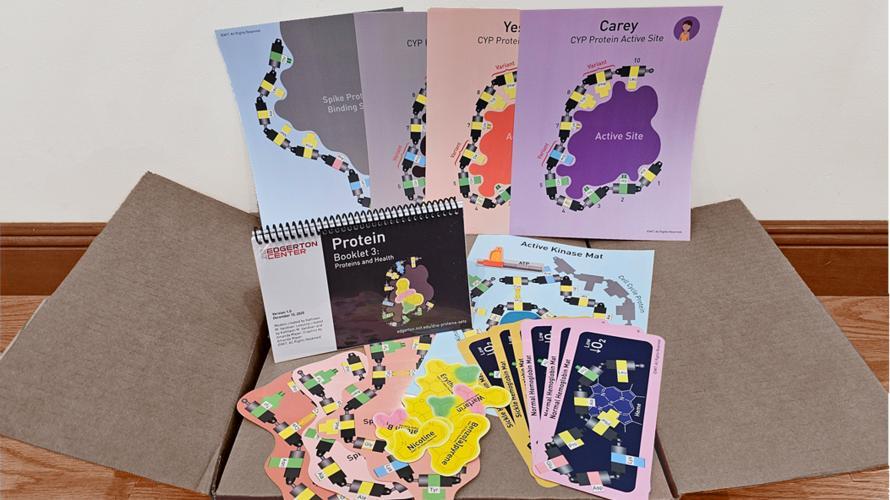
In the lesson about cytochrome P450 proteins, vaping, and cancer — the most recent addition to the curriculum by Gruhl Mayer — students compare two versions of a liver enzyme that differ by just one or two amino acids. One version binds nicotine tightly and breaks it down quickly, so cravings come back sooner. The other doesn’t, and that small molecular difference can help explain why quitting is harder for some people than for others. “Having that direct connection between genetics and somebody’s behavior, in terms of addiction, is such an ’aha’ moment for people,” Gruhl Mayer says.
Excitement across the conference
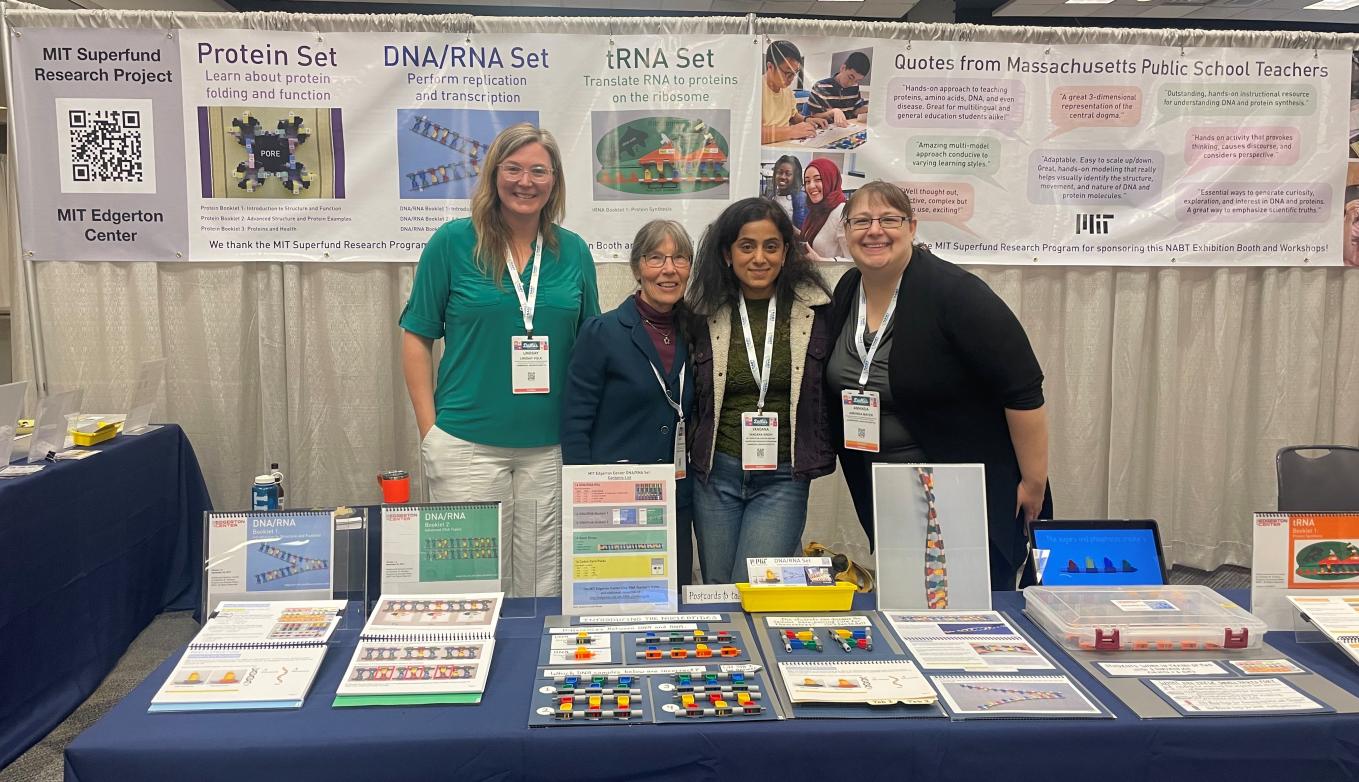
Volk and Singh welcomed scores of educators to the exhibition booth, explaining how the kits function, pointing teachers to classroom videos of students building with the models and suggesting the Edgerton workshop sessions. “The excitement level was very high there,” Singh recalls with a smile.
Many teachers told Singh the same thing: “Easy concepts are easy to teach, but for hard concepts, they need models like these that are tactile.” Recently-developed biotechnology and health expansion packs use the DNA and protein manipulative models to extend lessons into topics like CRISPR without buying an entirely new kit.
Teachers were enthusiastic during and after the sessions. Vandiver recalls a university instructor approaching her at the end of one workshop, determined to get the materials for his own classroom. “My students need this,” he told her. NABT leadership also attended a workshop and heartily encouraged the team to keep spreading the word about these materials to teachers across America, and to come back next year.
Even experts who arrived skeptical left the workshops impressed. Gruhl Mayer recalls one attendee who sat silently in the front row of her session, seemingly waiting for a mistake. By the end, the person was nodding and smiling. For Gruhl Mayer, the fact that this material resonates with experts and beginners alike is crucial.
She also sees a bigger reason why sharing this material matters: A public that understands biology is better equipped to make decisions about its health. “Even if you’re not going to become a biologist, it’s really important for people to have a basic knowledge of biology,” she says. “When people understand things better, suddenly they can connect with them more, and make much better decisions about both their internal world and the world as a whole.”
A team effort across MIT
The trip to Dallas was made possible by a partnership across MIT. The Edgerton Center team’s participation in NABT 2026 was funded in part by the MIT Superfund Research Program, led by Bevin P. Engelward, professor of biological engineering, director of the MIT Superfund Research Program, and associate chair of the MIT faculty. Engelward also supported two postdocs from her research group, Volk and Singh, who volunteered to learn the curriculum and join Vandiver and Gruhl Mayer in Dallas.
Both researchers came to MIT with backgrounds in teaching. “The amount of satisfaction that you get being a teacher, I don’t think you can get it anywhere else,” Volk says, and Singh agrees.
The pair started the week at the Superfund Research Program conference in Portland, Oregon, and flew straight to Dallas. “I gave a presentation, then we were just running with our bags and caught the flight to NABT,” Volk recalls. Asked how they kept up their energy, Volk held up a cup of coffee and laughed. Both describe Vandiver and Gruhl Mayer’s dedication to the project as energizing. “It’s hard not to feel that contagious passion,” Singh says.
Into classrooms across America
Teachers left NABT with swag bags full of doodads and pamphlets aplenty, but most importantly, many left with new ways to make molecular biology hands-on and approachable. The team hopes the curriculum will reach many more classrooms across America in the months and years to come.
For the team, a highlight of the trip was the people they met. “Biology teachers, they’re just so nice,” Volk says. “You can just tell their passion for their students. It’s kind of a culture where everybody’s there to support each other.” Singh adds.
“The goal is about helping students at the end of the day,” Volk says.